
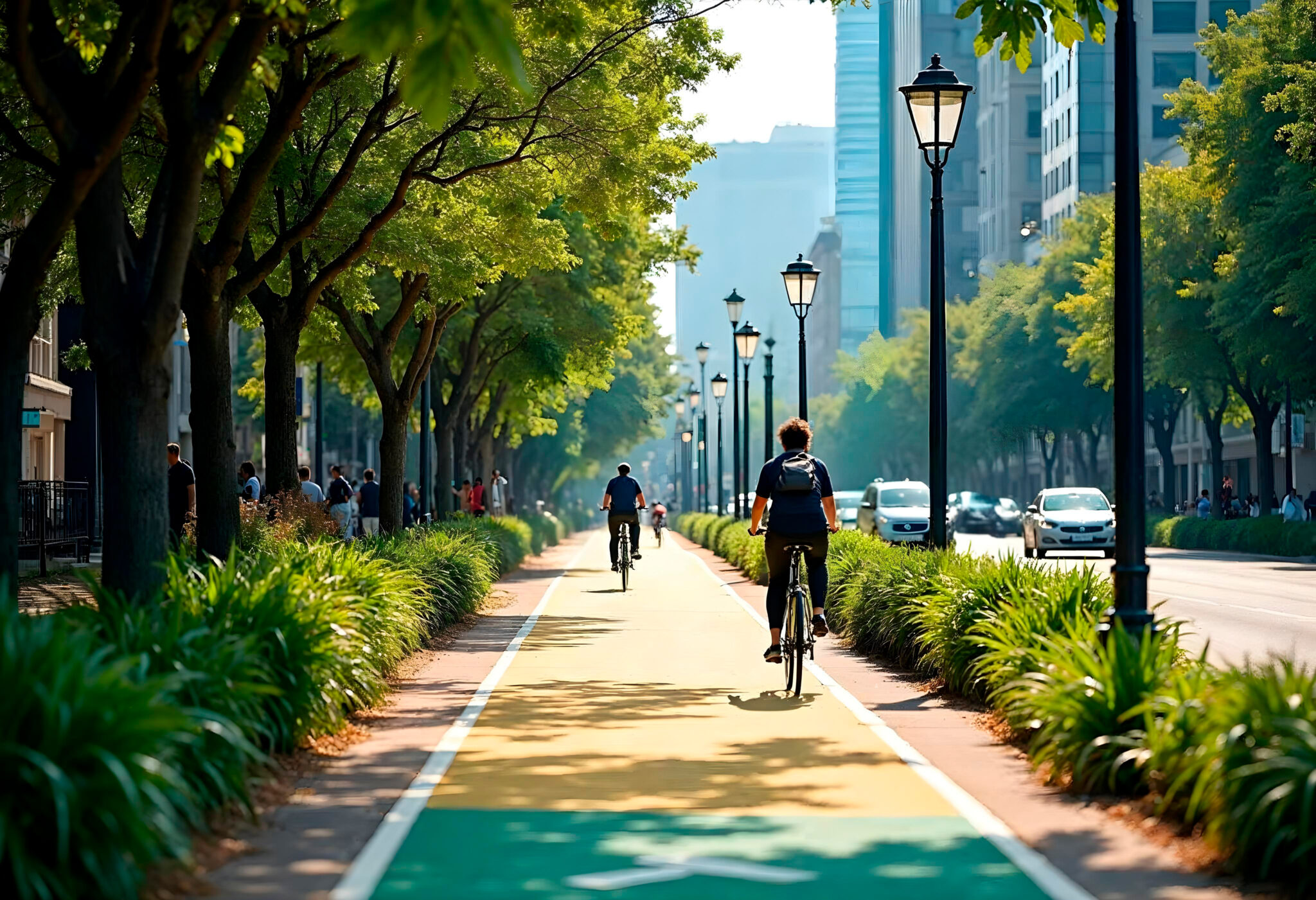
Sensory overload: Long commutes, tight schedules, and constant noise. It’s the reality for many Americans in the heart of a bustling city. The drive toward urban sustainability USA is not just stronger than ever for many in the USA but smart to build a healthier life by 2025. To embrace zero-waste living: effective steps for busy city dwellers to support city green initiatives follow in the article. These are the practices that reduce your environmental footprint without stressing you out about it. Daily tiny changes and community initiatives are explained in clear, simple language. By the end, you’ll have practical steps to make your urban routine greener and more sustainable.
Understanding Urban Sustainability in American Cities
Many huge cities across the USA face the challenge of rapid urbanization in places like New York, Los Angeles, and Chicago, that strain resources and burden the Earth’s atmosphere. However, with new laws and technologies available to put in practice, life can be green by 2025.
Such would be, for instance, the fact that according to recent urban plans, carbon emissions are to be cut by 50% by mid-century. And this is going to require better public transport, more green spaces, and energy-efficient buildings. Busy professionals can thus become part of the solution by aligning their habits with these key aims. Think of it as joining a larger movement where individual actions add up to real change.
Why It Matters for City Dwellers
Over 80% of Americans already live in urban areas; by 2025, eco habits 2025 will become not just a choice but a necessity. These habits are not only great for the environment but also save money and make you healthier, by, for example, cutting waste to reduce household costs or walking/biking to improve health. As urban sustainability USA unfolds, cities will enact such encouragement as tax cuts for solar panels or rebates on electric bikes. Embrace this now, and you’re going to be way ahead of the curve.
Building Daily Eco Habits for a Greener Routine
Energy-Saving Habits You Could Easily Incorporate into Your Home Right Now
Start with what people already are invested in and make the shift from there. The eco habits 2025 will be all about ease—little tweaks that stay. Here’s how to incorporate them without changing your entire life.
Energy Saving at Home
Your apartment or small house is one of the best places to get some quick successes. LED light bulbs are among the most efficient, requiring 75% less energy than their incandescent counterparts, plus they’re long-lasting to boot. Unplug them when you’re not using them—it stops any ‘vampire’ power drain. In 2025, you can get something like a Nest thermostat that’s not expensive and will learn your pattern and save 10-15% on bills.
- Select the energy-star appliances. When replacing the old ones, look for the label; it ensures efficiency.
- Insulate your windows. In winter, inexpensive draft stoppers will keep the heat inside.
These steps were suggested under urban sustainability USA goals, where buildings cause 40% of emissions.
Sustainable Transportation Choices
Cars jam the city with always too much traffic, but something new gets around. Catching the bus, or sharing a car can cut your carbon emissions in half compared to driving alone. Transit or Waze type apps will be simple to navigate by 2025.
For local travel:
- On foot or on two wheels: There are designated bike lanes in most US cities – aim for 30 minutes a day.
- E-scooters / E-bikes / bike-sharing: Lime, Citi Bike and many other cheap dockless ones.
- Hybrid remote work: Try and negotiate two days a week without office if possible and lose the commute.
Catching bike-to-work challenges as part of city green initiatives can earn you perks—free gym memberships, for example.
Embracing Zero-Waste Living in Tight Spaces
Zero-waste living sounds like quite a lofty goal when, in fact, in an urban environment, it’s all about smart trade-offs rather than aspiring to some perfect ideal. The point is to reduce waste going to the dump or landfill because, for example, the USA cities alone send millions of tons there each year. So start by auditing your garbage — what really could or could not be thrown, or re-used?
Kitchen and Grocery Tips
The refrigerator and pantry happen to be two of the highest waste-producing areas. Cut plastic use by 90% by shopping with reusables.
- Shop at Whole Foods and such for grains and spices in your jars; no packaging required comes in handy.
- Composting basics: A small countertop bin easily turns your scraps into soil; in many apartments, it goes out to the curb.
- Meal planning: Apps like Mealime suggest recipes using what you have, minimizing spoilage.
Bathroom and Personal Care
Single-use plastics lurk here too. Opt for bar soaps over bottles; they last longer and pack less waste.
Here’s a simple comparison table for switching to zero-waste essentials:
| Role | Traditional Option | Zero-Waste Swap | Benefits for Urban Dwellers |
| Underwear | General — three-pack from Hanes | Ethical — a single-pair purchase from PACT | Less clutter; ethical sourcing |
| Jeans | Regular —jegging style from American Eagle | Sustainable —high-rise wide-legged ones from Reformation | Durable; versatile for city life |
| Socks | Regular — three-pack of Uniqlo ankle socks | Eco-friendly — bamboo pair from Thought | Breathable; quick-dry for commutes |
| Yoga pants | Lululemon — basic black Wunder Under leggings | Organic cotton — matching high-rise wide-leg ones from PACT | Comfortable; multi-use for work and gym |
| Leggings | Clothes made with Xtra Life Lycra Spandex fibers | Plant-based performance — High-waisted ones from Girlfriend Collective | Sustainable fabric; sweat-wicking |
| Shampoo | Plastic bottle | Solid Bar or Refill Station | De-cluttering; travel light |
| Toothbrush | Plastic, nylon | Bamboo, plant bristles | All biodegradable; do not cut toothbrushes |
| Cleaning wipes | Disposable packages | Reusable cloths PLUS vinegar spray | $50/year ROI and multitasker |
| Razors | Multi-blade disposables | Triple threat: Reusable, better shave, less waste! | One-time buy; smoother results |
This table shows how zero-waste living can be convenient for urban living – practical and even fiscally sound in the long run.
Food Choices for Sustainable Eating
What you eat has just as much of an impact on the planet as how you get around. Urban farming and sourcing locally are booming in urban sustainability USA — with cities like Detroit feeding thousands.
Local and Plant-Based Focus
Eat seasonally to help the farmers and cut transport emissions from food. There’s fresh produce at farmers’ markets in most USA cities without that long-haul.
- Meatless Mondays: skipping one beef meal weekly saves 5,000 gallons of water every year for the individual.
- Indoor herb garden: You can grow basil or mint in pots on your windowsill; flavor without the distance to the grocery store.
- You may purchase through an application such as Farmigo, connecting you with local farmers within the city.
By 2025, 40% of the population will have tried plant-based eating as a health and environmentally friendly measure.
Reducing Food Waste
Portioning really is key in the small kitchens so freeze your leftovers right away, and use apps such as Too Good To Go that give you cheap surplus from local spots.
Participating in City Green Initiatives
You don’t have to toil solo; what work is provided by city green initiatives is an easy collective action. In fact, in the USA, program examples include Green Schools in NYC or Million Trees in LA, all inviting the citizenry to plant, clean, or advocate.
Community Engagement Ideas
Team efforts lighten the load: Joining creates networks in an activity with otherwise isolated effects.
- Volunteer cleanups: Organizations like Keep America Beautiful organize monthly events—two hours monthly makes a difference.
- Basic Advocacy: Sign petitions through Change.org sorts of apps for more bike lanes in your neighborhood.
- Green workspaces: Maybe office recycling or plant days can be proposed; there are many companies that now give incentive for being eco-leaders.
These efforts will be tied to urban sustainability USA, where community input shapes policies. In 2025, virtual options will enable even the busiest people to participate from home.
Tech Tools for Tracking Progress
No track is going to be easy. It’ll probably get expensive, or there’s very little room available. The going gets tough. Done in a range? There’s a way to smooth things out. Do them one by one, each month in a year. Look at those tax credits the USA gives; an energy audit at your home may bring in $500!
Vertical gardening or community shared plots will clear up this space problem. Keep tabs on your wins: a journal that keeps saved dollars or days with cleaner air.
People coming to rent it in a zero-waste living facility would include developing friend’s networks next door for collective buys or sharing tools to develop society.
Conclusion
It’s about baby steps taken over time and cumulative impact eco habits 2025. Helping save energy and participating in making a ‘green’ city so purported in the future landscape of the urban sustainability USA, and everywhere else where people live in a bustling city can lead a healthy life and save our shared habitat. Zero-waste living can be an automatic culture that preserves resources and sparks joy in a simple routine. As 2025 unfolds for you, remember that your actions ripple out to inspire others in this vital movement. Commit one action today, and your future self and this planet will thank you. Let’s develop cities with green living as normal, not rarity.